Epic Protein Powder Review & GIVEAWAY

SL-A-Vegan-Obession-Giveaway


Epic protein

Epic Protein Powder Review. A Giveaway from Sprout Living.

Vegan, gluten free and processed sugar free protein powders. Truly healthy. No wolves in sheep’s clothing here!

Epic Protein Powder : With a pea protein base, these vegan, gluten free protein powders are a quite unique. They have a complete amino acid profiled (branch-chain amino acids) and are real food so they are easy to digest. There are lots of protein powders on the market and some of the cleanest seeming ones still have ingredients in them that I think unnecessary or are not actually very healthy. What I love about Epic Protein is the inclusion of nutrient rich and quite ‘new to the market’ unique ingredients. Each flavour in the range contains different ingredients.

The Chocolate Maca - has maca, an adoptoneginic herb that provides energy and hormone balance. Ceylon Cinnamon which has been shown to regulate blood sugar levels. Chocolate of course solves all problems (a view not yet backed by the FDA, but known by millions of us..right?!).
The Original - and it is original. It delivers phyto-chemicals and pre-biotics from Jerusalem Artichoke and Cranberry Seed. Sacha Inchi a superfood (mountain peanut) from South America known for it’s high Omega oils content. I’ve eaten these whole and they are good. A mix of powdery, crunchy and nutty. These new foods are being promoted in the West now and helping bring money to rural areas where the crop is grown. Let’s hope they stay fairly traded!
Vanilla Lucuma - as with all of the other organic protein flavours from Epic Protein, each serving has at least 19 grams of protein from all-plant sources. Totally vegan. Gluten free. Sweetened here by lucuma ‘Gold of the Incas’ a naturally sweet plant packed with beta carotene. The Vanilla bean sweetens it too. Also added is Baobab. A dry powder from the inside of a fruit of a tree native to Africa. High in Vitamin C.
Green Kingdom - as described by Epic a ‘potent blend of land and sea plant life’. Spirulina (a nutritional champion) Kale..we all know about kale now..right?! and Indian Moringa. Another superfood that is gaining in popularity. It is known as the ‘clarifier Tree’ Webmb.com says, “Moringa is used for “tired blood” (anemia); arthritis and other joint pain (rheumatism); asthma; cancer; constipation; diabetes; diarrhea; epilepsy; stomach pain; stomach and intestinal ulcers; intestinal spasms; headache; heart problems; high blood pressure; kidney stones; fluid retention; thyroid disorders; and bacterial, fungal, viral, and parasitic infections”. Impressive. It is a cheap and easy plant to grow and a dense and important source of nutrients. All the ingredients are listed on the front, nice and clearly.

Screen Shot 2015-06-19 at 13.52.27
Initially, I found them a little sweet for my palate at first but this is only because I do not usually eat protein powder. All contain a touch of Himalayan Pink Salt to balance out the sweet and salty elements of our taste buds. I made a couple of smoothie with both the Chocolate Maca and the Vanilla Lucuma for a friend who is not usually the smoothie type and she loved them both. The powder is slightly gritty, a characteristic of all protein powders, but I think this one is silkier then most. You can purchase them in servings of between 1 - 69 so they are fantastic to take as sachets if you are going on a road trip and have little space in your bag. Or for taking to the gym or out for a run in your water bottle.
I think you will love them too. Which is why I wanted to give you a chance to try them for free. The lovely people at Sprout Living want that too. So together we are hosting a giveaway!
The are generously giving to one winner a 16 oz Chocolate Maca and samples of the Original, Vanilla Lucuma and the Green Kingdom. Together with a Sprout Living Blender Bottle shaker. The prize is worth over $40!
Entrants in the USA only. You have 14 days to enter beginning today. Scroll down to enter below. Good luck!!

SL-A-Vegan-Obession-Giveaway

Enter the giveaway here..

a Rafflecopter giveaway


Amazing Superfood AND More! How the Baobab Tree Took One Man From Clinical Depressive to Successful Entrepreneur.

IMG_0300


We all want to be super powered, super heroes, right?!  Right?! Of course we do. That is why when we see a new superfood in the headlines we are straight to the grocery store filling up our trollies with tonnes of the stuff.  I once turned slightly orange because I ate too many carrots (great source of Vit A).  It wasn’t a good look, so I took up eating balefuls of greens instead.  Thankfully I’ve not turned green!
Today, I have a recent discovery I want to share with you. Baobab.  Not only is the level of antioxidants of this fruit off the charts, but it has the power to change the lives of millions in Africa.  Whilst keeping you in top form too. I have the amazing story for you.

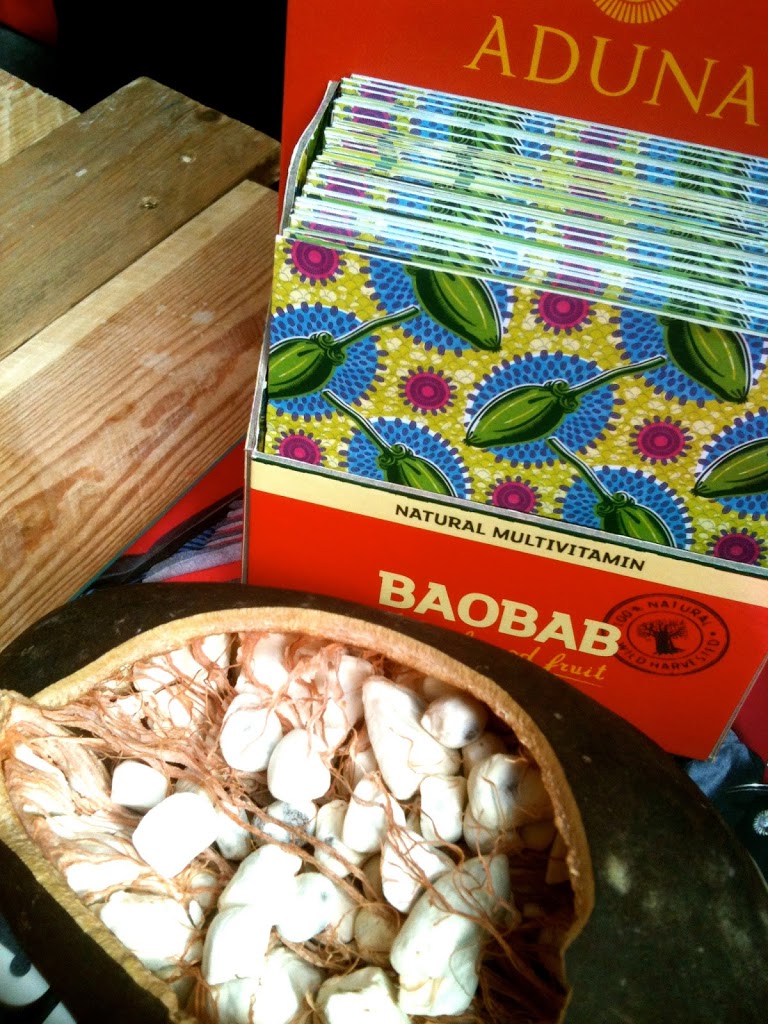
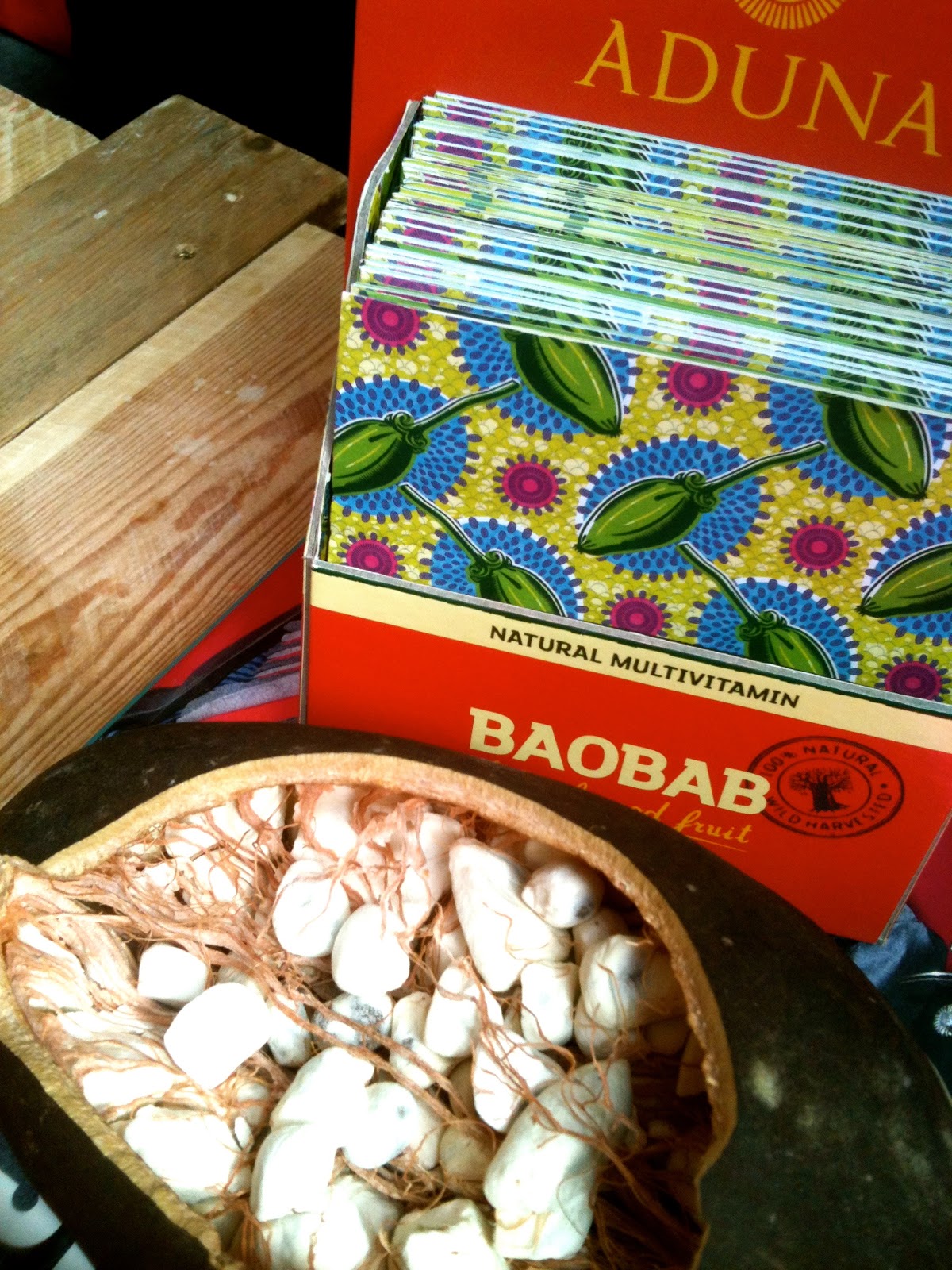
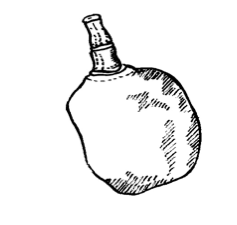
While at the Allergy & Free From Show recently, I spotted a cheerful and brightly coloured stand with a bizarre looking pod on display.  I had heard of Baobab before from  Inspiral Baobab & Onion Kale Chips
  but never had I seen what it actually looked like in its natural state. I’d heard of the tree, sure.  It is one of the reasons for me chalking up Madagascar on my bucket list (that and the dancing lemurs)!  Upon closer inspection of the pod, I was so surprised, the interior of the pod was nothing like I’d ever seen before.  It was jam packed with off-white, pebble like, powdery clusters, of which I discovered, were edible fruits of the baobab tree.

I was so curious, I asked if I could interview the one of the co-founders of the company selling this powder in the gorgeously vibrant tubs on display.  And he said yes!  Read on and I will share with you what he told me, and a recipe, or two.

Andrew Hunt                                                    Nick Salter                                          Founders of Aduna


The story began when Andrew Hunt, then aged 25, had been diagnosed as suffering from clinical depression.   Life in advertising had brought him to the brink of despair.  He’d lost all his spark after years of selling products to the market that he just didn’t believe in.  He was spent. He felt totally void of life.  It was a random phone call from a family friend, Angus Davison, which was to come to his rescue. Angus happened to need someone to help on a project in Gambia, so he called Andrew on the off chance he may be interested. He wasn’t. Feeling like he had nothing to lose, however, Andrew jumped on a plane bound for West Africa.

The African sunlight, the colour, the people, all crept under his skin and for the first time in months Andrew felt the life being sucked back into him. He told me, he was happy.  Why? I asked him. His answer was simple. He was expressing himself fully, creatively.  Adding value. 

The initial six week project ended, but Andrew stayed. For 4 years. It was during this time, whilst he built up an organisation called Gambia Is Good to help farmers supply fresh fruits and vegetables to the tourist trade, that Andrew became increasingly aware of the abundance of natural products in the region.  25% of all of the  world’s botanical species originate from Africa, and yet less than 1% of what we see on the shelf.  It was his time working with Gambia is Good that Andrew began to learn about the iconic baobab tree and its myriad of uses.   


Aduna Is Born
After his return from Africa, Andrew was contacted by Nick Salter, a  fellow Africa enthusiast and baobab convert.  He too had been excited by the strange fruit. They both saw the potential to create a successful business which, through its core function of creating demand for baobab, could help sustain millions of rural households in Sub Saharan Africa. Together they formed Aduna (means ‘Life’ or ‘World’ in Wolof).  Andrew was keen to promote brand.  Branding a product increases its saleability, makes the producer feel proud.  But it had to be done well. No more cliche! he cried.  No more 3rd world Bob Marley maps and souvenir bongo drums, as means of Africans scratching out a meagre living. The branding he saw for their indigenous fruits (and most products) were falling short of the mark.  He decided he wanted to change that, so families could make a good living and build a sustainable business. This took a whole year. They decided they wanted to create a brand that spoke of Africa.  It’s culture, warmth and vibrancy.  They created a design is based on traditional African wax fabric. It is altering the old focus.  They created a premium product and in November 2012 Aduna was launched.  Before long their luxury products were being sold in Harrods & Liberty of London . 

Making Lives Richer in Africa
Aduna Feel Good World. Promoting Africa. 

Instead of the world view being ‘projects in’ Africa, Andrew aims to shift the focus to ‘products from’ Africa, with baobab alone estimated by National Geographic to be worth a potential $1bn to rural Africa.
With no need for land, water,  fertiliser,refrigeration – or even farming - the baobab crop is  hugely sustainable (though I worry about anything getting so popular over time that it alters the status quo from natural to farmed). The National Resource Institute estimated that 2-3 million households in Southern Africa alone can supply the fruit, making the likely figure for the whole of Africa closer to 8-10m.  The yeald of each tree averages at 200-300 kg.  As you can see, promoting and selling the baobab will substantially increase the income of African families at little cost to themselves.  What’s more, when communities earn money from baobab, they have an increased incentive to protect the trees.


How Aduna Is Helping To Build Better Sustainable Futures For Africans
Each year Aduna invests 10% of its profits into the Aduna Foundation, which aims to support small-scale producers through capacity building, social Innovation and  assistance with regulatory issues. This is something that small scale producers would have little means to do for themselves and is crucial for exporting their goods.
In the longer term, Aduna wants to help develop children specific branding in Africa, to divert consumption from sugar laden powered drinks imported from Malta, to the healthy baobab.  Andrew says, the kids want the packaging they see in the West.  They are drawn, just like any child to brands directed to their likes.

About The Boabab. The baobab is an incredible tree that has been in existence before the continents split and can have a lifespan of up to 5000 years. It  behaves like a giant succulent, absorbing and storing water  in their trunks during the rainy season.  When the rains cease and the land turns arid, the tree fruits and harvests its own store of water to produce its fruit.  It is the only fruit in the world that is known to dry on the branch.  Even when the pods are harvested they have a shelf life of 3 years. They need no extra land to plant, they need no man’s intervention in watering, they are wild harvested so the pods are just opened and the powder is simply sifted before packing.  The baobab’s velvety green fruits grow from white flowers that are pollinated at night by bats. Inside the hard shell are the seeds which are coated in an off-white powder that is quite tangy to the taste, reminiscent of a mix of citrus and perhaps melon. 


Uses
Bouye, traditional Senegalise drink, made with baobab fruit pulp lemon & sugar (I’d use Stevia or Xylitol for low cal drink).  Cheesecake, salad dressing. rising agent, a substitute for cream of tartar, pectin, salads, smoothies, jams, ice cream etc. 


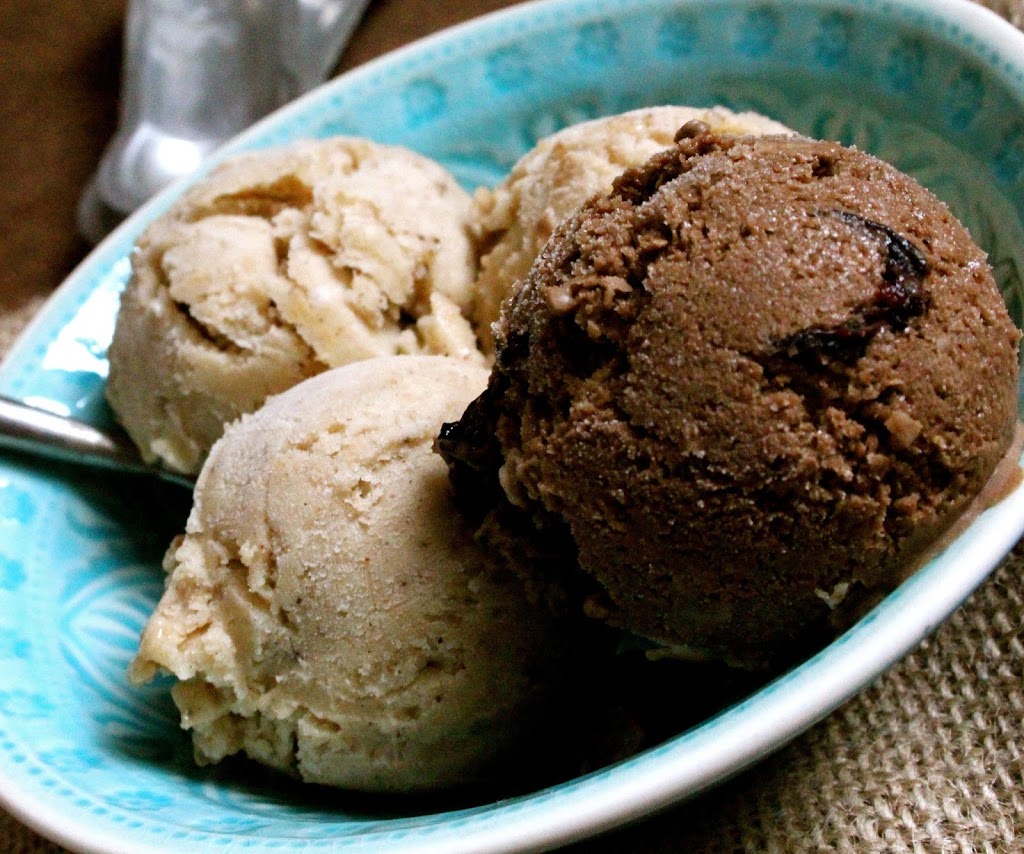
Banana & Baobab Ice cream (recipe below)


Nutritional Value

The powder is an incredible source of the minerals potassium, calcium, iron, and magnesium, an outstanding source of vitamin C, and a great source of B vitamins. It’s a fantastic antioxidant, has anti-inflammatory properties. It is a prebiotic. It has a high pectin content, so you can use it as a thickener in recipes. It is a natural flavour enhancer, so adds depth to any dish, sweet or savoury.

It contains 50% dietary fibre.  It has 2 x the calcium than of that in milk!  (in your face, dairy industry!)  It even trumps the mighty kale!


Baobab Hits The Catwalk
Since their launch in November 2012 the company has grown at an amazing rate. They were hailed the ‘Supplement of choice’, for top models during London Fashion Week.  Those in the beauty industry are quick to catch on.  Vitamin C boosts collagen production.  2 x the antioxidants per gram of goji berries.  Great for youthful, glowing skin (along with a healthy diet & exercise of course).


Export

Despite difficulties in obtaining permits to export foods from countries within continental Africa, we are beginning to see the export of its treasures.  Exotic ingredients are being used in toiletries and the beauty industry.  Shea butter - super hydrating.  Marula oil, with more omega’s than Argan Oil and Moringa with no less than 30 antioxidants.  Aduna are planning to bring more natural products to the market soon.

The Future For Aduna
Recently awarded Best Selling Superfood  in planet organic, john bell croydon & whole foods.
Africa is full of resources but currently has minimal infrastructure.  Mostly it is not export ready.  Delving into the political history of African revenue, debt and with a third of Africa’s population reported to be malnourished, makes me dizzy at its wide ranging issues from wars, to corruption and climate. It is not a problem that is going to go away any time soon.  But Aduna and companies like them, are forging new hope. Aduna plan to bring more African natural products to the market but it is a complicated process to get exotic foods to market outside of Africa.  According to Novel Foods Act, the export of any product with significant consumption before 1997 has to be passed by the European Commission. So, to help with this issue, Aduna work with Phyto Trade. . Phyto Trade  (phyto = plants.  just in case you didn’t know. I didn’t.).  Phyto Trade is a  trade association of the natural products industry in Southern Africa. Their work has lowered the costs for approval by the EC from an average of €10 million to less than €100,000 and thus opened the EU to access non-Western fruits, vegetables and nutraceuticals while at the same time saving unnecessary animal testing.  Also a proportion of Aduna’s profits is used to help the tree owners to secure their ownership. They are also helping to fund Afri Kids a children’s rights organisation in Northern Ghana. 


High levels of calcium (great for vegetarians and vegans).

Considered a good omen. 
Pollenated by bats. 
Outstanding ability to withstand severe drought and fire.


and now…


Taste of baobab!


So far, I’ve used the baobab powder in 2 recipes!

 Perfectly Sweet Banana & Baobab Ice cream

3 very ripe bananas
2 tbs baobab powder
1/2 tsp vanilla
1/4 tsp salt


Peel & freeze bananas.  When frozen, put in a blender with remaining ingredients. Blend until like soft whip.  Freeze for 1 hour.  Serve


Vanilla & Baobab Macaroons (no bake)


2 Cups of toasted unsweetened, ground (use a coffee grinder) coconut.  If you want to keep the recipe raw then do not toast.
1/2 cup of almond flour
1 tbs baobab powder
3 tbs gently melted coconut oil
2 tbs stevia powder
2 tbs agave
1 tsp vanilla powder
1/2 tsp Himalayan salt

Makes 9

Mix all the ingredients in a bowl.
Pack portions of the mix into an ice cream scoop.  Gently press the release trigger onto a board.  Do this for remainder of the mix.  Freeze for at least an hour.
Put on a pretty plate and serve.  I cannot tell you how good these are!  I am hooked, crazy in love with them. AND they are good for you. Perfect.


A friend of mine, upon me telling him of my recent interest in baobab, surprised me with stories of his childhood spent in Mombasa with baobabs in his garden!  Have you tried it yet?  Let us know if you have in the Post a comment box below.

Where can you buy Aduna?
Online  


Want to be part of it?

Buy the products, the effects are far reaching!
Aduna accepts interns to be part of their team.  Click Internship for details.
Follow Aduna on Facebook for news & events.


How To Stay Healthy Whilst Travelling

IMG_6605


Upheaval is the buzz word, ringing like tinitus in my ear, right now.  In three days I will be airlifted from cold and drizzle and transported to summer sun and long days, immersed in a culture I’ve yet to discover and surround by voices I do not (yet) comprehend.  I always think it is a crazy (crazy in a good way) notion - travelling, it’s like visiting another planet.  My excitement knows no end.

My spare bed is now quite unrecognisable.  Strewn with ‘stuff for my trip’.  Being a vegan, and a long time gypsy girl, I’ve gotten used to carrying a few essential food stuffs.  Enough to keep me going until I find a natural food store, or buy supplies online.  There is something about unpacking and having your favourite green tea, or snack to hand to settle you in.  Also, having a zip baggie with a couple of days of breakfast in takes the pressure off shopping. It also helps to have some sense of normality when plonked in a vastly different environment. 

Plane & travel essentials for staying healthy whilst travelling;


Airports are a radiation hazard, and the stress of travel, cabin pressure, recycled air dryer than the Sahara and jet lag can all take it’s toll.  But there are things you can do to protect yourself and stay on top form so you can arrive feeling (relatively..it’s a long flight) fabulous.  So, here is a list of tried and tested must haves for road trips and skyward journeys.

In my hand luggage I take 

2 different probiotics to keep my digestion healthy
chlorella powder to minimise the effects of radiation
wheatgrass a good all-round powerhouse super food to supplement (or replace) airline food
1 x 10 ml (empty..fill it up on the plane as customs confiscate liquids) spritz bottle for spraying face regulary with water, to counter dehydrating effects of cabin air
travel pack digestive enzymes
soft spongy ear plugs
miso soup powder
On previous trips I’ve taken kale chips, homemade raw bread, homemade muffin or cake, but I’m am experimenting with eating very little on the trip. I am planning to sleep through most of it instead and mainly drink lots of water and green tea.  I figured, leaving the UK in the evening, sleeping through most of the 15hr (eek!) flight and taking up on the day, Argentine time, when I touch down at 10am.  That is the plan.

In my suitcase

zip baggy of breakfast (pea protein powder, green super food powder, acai powder, goji berries, flax meal)
kelp powder (to lesson effects of radiation)
1 pouch of baby food - fruit berries - to add to breakfast powder
1 pouch chicory coffee
1 box green tea (decaf)
1 zip baggy nooch (nutritional yeast powder)
1 packet of nori sheets (to make nori burritos)
4 single serving miso soup powder
2 raw energy bars
kale chips

Upon arrival at destination 

I perform a saline nasil wash (salt in warm water - antibacterial…counteract the recycled cabin air)
take a 1/2 tsp reishi mushroom powder to boost my immunity
have a warm, comforting cup of tea

grab my camera, $ , shades, room keys, a keen sense of adventure,  and go exploring.  I’ll do a walkabout and suss out the area.  Source some promising cafes I may want to frequent.  Track down the natural food stores, and do some serious people watching.

Excited.  EXCITED!!

Have you visited Argentina?  Do you live there?  Send me tips and ideas of places you think I have to visit in the city.  Must do’s in Buenos Aires.  I’ve noted a few vegan restaurants to try.  What are your travel essentials?  Leave a comment below and let us know.